






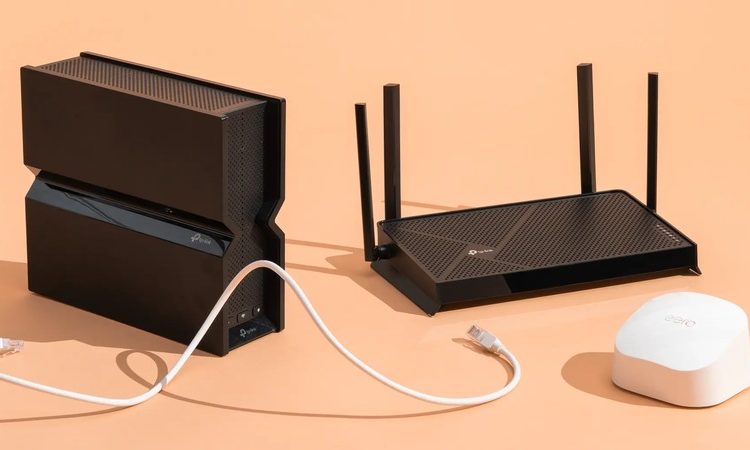

For emergency services—police, fire, EMS, and disaster response—communication is not just a utility; it is the central nervous system of every operation. When seconds count and existing infrastructure is compromised, reliable connectivity can mean the difference between life and death. Cellular routers, particularly those leveraging robust 4G and 5g ap networks, have become indispensable tools, providing a mobile, resilient, and powerful communication backbone that traditional systems cannot match. Here are the top 10 detailed advantages of using cellular routers for emergency services.
1. Rapid Deployment and Mobile Command Center Capabilities
The Advantage: Establishing a secure, high-bandwidth communication hub anywhere, within minutes.
The Details: In the critical initial stages of an incident, a fixed communication infrastructure may be non-existent, damaged, or overwhelmed. A cellular router, integrated into a command vehicle or carried in a rapid-response kit, can be powered on to instantly create a local network. This provides immediate internet access for computers, enables real-time data exchange with headquarters, and allows for the setup of on-scene video surveillance and VoIP phone systems, transforming any vehicle or location into an instant command post.
2. Unparalleled Network Redundancy and Resilience
The Advantage: Maintaining a critical communication link even when primary systems (like landlines or municipal fiber) fail.
The Details: Disasters often damage physical infrastructure. Cellular networks, with their distributed nature of cell towers and multiple power backups, offer a inherently resilient layer of redundancy. Advanced industrial cellular routers are equipped with dual or multi-SIM capabilities, allowing them to connect to two or more different mobile carriers simultaneously. If one network fails or becomes congested, the router automatically fails over to another, ensuring that vital communications are never interrupted.
3. High-Bandwidth for Real-Time Situational Awareness
The Advantage: Transmitting rich data, like live HD video and complex maps, to enhance decision-making.
The Details: Modern emergency response relies on more than just voice. A cellular router, especially one with 5G capabilities, provides the bandwidth needed to stream real-time HD video from body-worn cameras, dash cams, and drones directly to incident commanders and headquarters. This provides an unprecedented level of situational awareness, allowing commanders to assess threats, track resource movement, and make informed strategic decisions based on a live feed from the heart of the operation.
4. Secure, Encrypted Communications
The Advantage: Protecting sensitive operational data from interception and cyber threats.
The Details: Transmitting tactical information over public networks is a significant security risk. Industrial cellular routers are built with security as a core feature. They support robust, hardware-accelerated VPN (Virtual Private Network) protocols like IPsec. This creates an encrypted tunnel from the router in the field directly to the department’s secure network, ensuring that all data—including video, patient information, and tactical plans—is protected from eavesdropping or manipulation.
5. Priority and Preemption Access to Cellular Networks
The Advantage: Gaining guaranteed access to the cellular network during times of congestion or crisis.
The Details: During a major incident, public use can overwhelm cellular networks. First responder cellular routers are configured with SIM cards that are part of priority access systems, such as FirstNet in the U.S. or similar services globally. These systems provide:
- Priority Access: Getting to the front of the line for network resources.
- Network Preemption: The ability to temporarily bump non-emergency users off the network to free up capacity.
This ensures that first responders’ communications get through when it matters most.
6. Interoperability Between Different Agencies
The Advantage: Creating a common communication platform that bridges different departments and jurisdictions.
The Details: Large-scale incidents often involve multiple agencies (police, fire, federal). Cellular routers can serve as a unifying technology. Different agencies can establish secure VPN tunnels from their respective vehicles back to their own command centers, all while sharing a common cellular gateway. This facilitates seamless data sharing and coordinated operations without requiring all parties to be on the same, often incompatible, traditional radio systems.
7. Enhanced Safety for Personnel
The Advantage: Providing direct communication and location tracking for personnel in hazardous environments.
The Details: For firefighters inside a structure or a lone officer on a call, a cellular router can be a lifeline. It enables reliable communication where traditional radio signals may be blocked. Furthermore, with integrated GNSS (GPS), the router can provide precise location data for all connected personnel and assets, enabling command to monitor their position in real-time and respond instantly if a “man-down” alert is triggered.
8. Support for a Wide Array of Connected Devices
The Advantage: Acting as a central hub to connect and power the entire ecosystem of modern emergency response technology.
The Details: A modern response vehicle is a hub of technology. A single industrial cellular router can provide connectivity for:
- Mobile Data Terminals (MDTs) in patrol cars.
- Automatic License Plate Recognition (ALPR) systems.
- In-vehicle camera systems.
- Medical devices in an ambulance for transmitting patient vitals en route to the hospital.
- Drones for aerial reconnaissance.
This eliminates the need for multiple, separate data connections and simplifies the vehicle’s technological architecture.
9. Cost-Effectiveness and Operational Efficiency
The Advantage: Reducing reliance on expensive, proprietary networks and streamlining operations.
The Details: Building and maintaining dedicated private land mobile radio (LMR) or microwave networks is incredibly costly. Leveraging commercial cellular networks with routers offers a more scalable and financially predictable model, operating on a service subscription basis. Furthermore, the ability to transmit data (like reports, warrants, and fingerprints) directly from the field reduces response times, saves fuel, and keeps officers in the community longer, enhancing overall operational efficiency.
10. Scalability for Disaster Response and Large Events
The Advantage: Quickly scaling communication infrastructure to meet the demands of massive, dynamic operations.
The Details: During a wide-area disaster like a hurricane or wildfire, or for a planned large public event, communication needs can explode. Cellular routers are inherently scalable. Dozens of routers can be deployed in vehicles, temporary stations, and on equipment, all connecting simultaneously to the cellular network. With their rugged design, they can operate in the harsh conditions typical of disaster zones, providing a flexible and rapidly expandable communication grid that traditional systems cannot match.
Conclusion
A cellular 5g outdoor router has evolved far beyond simple internet access devices for emergency services. They are the cornerstone of a modern, agile, and resilient communication strategy. By delivering a powerful combination of instant deployment, guaranteed network access, robust security, and high-bandwidth data capabilities, they empower first responders with the situational awareness and tools needed to save lives and protect property more effectively. In an era where information is a tactical advantage, the cellular router has become as essential a piece of equipment as the uniform itself.
