






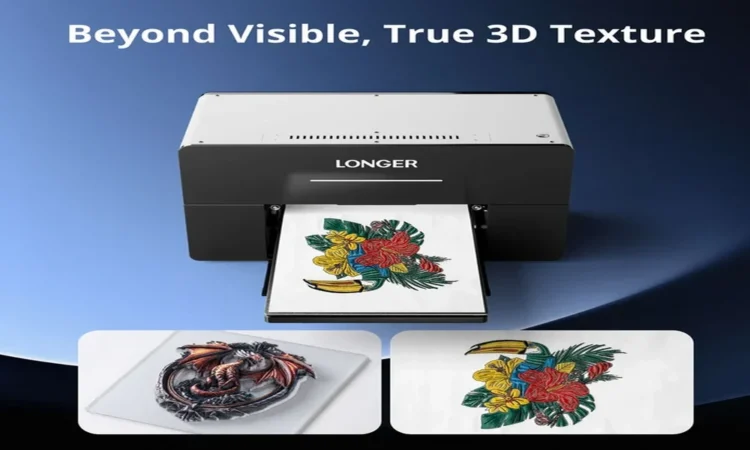

In modern digital customization, visual impact is only half the battle-tactile engagement has become the new benchmark for premium products. Standard flat 2D printing reproduces vivid colors, but 3D texture printing (embossed or raised printing) adds physical depth and touch. Powered by modern UV Printer technology, print shops and small business owners can build raised tactile layers directly onto wood, acrylic, glass, leather, and metal without expensive traditional molds or embossing dies.
However, 3D texture printing increases ink consumption and production time. Knowing when raised printing delivers a genuine return on investment-and when standard 2D printing is sufficient-is essential for running a profitable operation.
How a UV Printer Creates 3D Raised Textures
Unlike solvent or aqueous inkjet printers that rely on ink absorption, a UV Printer uses ultraviolet light to cure specialized liquid ink instantly upon contact with a substrate. Because the ink solidifies immediately, print heads deposit multiple consecutive passes on top of one another without colors smudging.
To produce a raised 3D texture:
White Ink Undercoating: The printer deposits multiple passes of dense white ink to physically build structural volume and relief.
CMYK Color Layer: Standard CMYK inks are printed over the elevated white structure to add full-color graphics.
Gloss/Varnish Topcoat: Clear UV varnish is applied selectively or full-bleed to create glossy accents, matte textures, or protective finishes.
Because this digital process requires zero plates or dies, an entry-level UV printer for small business enables short-run, highly customized 3D production directly on a benchtop flatbed.
Comparing 2D Flat and 3D Raised UV Printing
Understanding core operational differences helps determine which method suits a specific project:
Tactile Experience: 2D flat printing produces a completely smooth surface, whereas 3D raised printing creates elevated contours, simulated wood or leather grain, and embossed lettering.
Ink Consumption & Costs: Flat 2D jobs require minimal ink in a single pass. 3D textured jobs require multi-pass white ink and varnish layering, increasing ink costs per unit by 1.5x to 3x.
Production Speed: 2D printing executes rapidly in 1 or 2 passes. 3D raised printing runs at a moderate to slow pace due to sequential layering passes.
Perceived Market Value: Flat printing yields standard commercial-grade products. Textured 3D printing adds a luxury feel that justifies higher retail margins.
When Raised 3D Printing Actually Matters
3D textured printing should be applied strategically where physical feel directly drives customer appeal, compliance, or premium margins.
1. High-Margin Custom Merch & Packaging
Tactile feedback elevates product value in competitive retail spaces. Adding raised logos, spot-gloss patterns, or simulated leather textures to perfume boxes, wine bottles, metal tumblers, or custom phone cases transforms standard promotional items into luxury commodities.
2. Fine Art Replicas & Architectural Decor
Authentic art reproduction requires replicating the physical texture of oil paint brushstrokes and palette knife marks. Artists and print studios use a UV printer for small business to produce limited-edition textured prints that mimic original canvas paintings. Replicating natural slate, marble, or distressed wood grain on flat boards creates realistic architectural accents at a fraction of real material costs.
3. ADA Signage & Braille Compliance
Functional accessibility represents a highly profitable niche for raised UV printing. Americans with Disabilities Act (ADA) compliant signage requires raised tactile letters (at least 1/32 inch high) and Grade 2 Braille dots. Flatbed UV printing deposits compliant Braille dots and lettering onto acrylic or wood plaques in an automated process, eliminating labor-intensive manual bead insertion.
4. Trophies & Commemorative Awards
Incorporating raised 3D lettering and crystal-clear gloss emblems on acrylic blocks or wooden plaques gives awards an executive weight that feels substantial in the recipient’s hands.
When Flat 2D Printing Is the Better Choice
Stick with flat 2D UV printing in these scenarios:
High-Volume Bulk Orders: When printing thousands of trade show pens, keychains, or flat aluminum utility signs, print speed and unit cost take priority.
Flexible Substrates: Soft fabrics or thin flexible plastics subject to frequent folding can crack if thick, rigid UV ink layers are built up excessively.
Framed Displays: Graphics displayed behind glass or protective plastic shields lose tactile feedback, making 3D elevation redundant.
Choosing a UV Printer for Small Business Success
Consider these essential capabilities when choosing a UV printer for small business:
Dedicated White & Varnish Channels: Producing 3D textures requires independent print channels for dense white ink and clear gloss.
Extended Print Head Clearance: Building raised layers on thicker items requires automated height sensors and print head clearance up to 100mm-150mm.
Multi-Layer RIP Software Support: Quality Raster Image Processor (RIP) software automatically generates texture elevation maps from image files, streamlining prepress workflow.
2D flat printing provides efficiency and speed for everyday commercial jobs, but 3D texture printing converts plain items into tactile, high-margin products. By offering raised printing on high-value applications, small print businesses can justify premium pricing and differentiate themselves in a crowded market.